
-
×
 Motherboard Boxes 1 × $0.20
Subtotal: $0.20
Subtotal: $0.20
$0.15
Cardboard Display Boxes offer a practical way to present products where customers can see them, interact with them, and make purchasing decisions quickly. Designed for retail counters, shelves, checkout areas, exhibitions, promotional campaigns, and product launches, these displays combine product organization with visible branding. Their lightweight construction makes them convenient to transport and position, while their customizable surfaces provide valuable space for logos, product information, promotional messages, and graphics.
A well-designed display does more than hold merchandise. It helps create a clear presentation, directs attention toward featured products, and gives a retail environment a more organized appearance. Businesses can select the structure, dimensions, printing, finish, and internal arrangement according to the products being displayed.
Cardboard Display Boxes are purpose-built packaging structures that hold and showcase products at the same time. Unlike conventional shipping cartons that are primarily designed for protection during transportation, display packaging is intended to remain visible after reaching the retail environment.
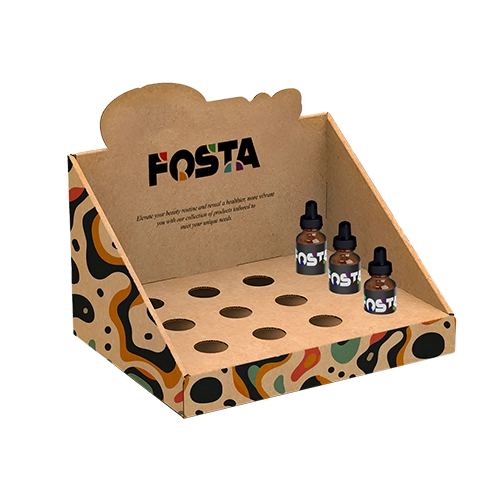
These boxes can be produced in different configurations, including countertop displays, shelf-ready designs, floor displays, compartmentalized units, and open-front structures. Depending on the product, a display may include shelves, dividers, holders, pockets, or tiered sections.
The material provides enough rigidity for many everyday retail applications while remaining easier to handle than heavier display materials. It can also be printed and finished to support a consistent visual identity.
Retail presentation can directly influence how easily shoppers notice a product. A product placed among numerous competing items may be overlooked, while an organized display can give it a stronger visual presence.
Cardboard display packaging can help businesses:
The design can be adapted to the product category and selling environment. A small countertop unit may work well for cosmetics or accessories, while a larger floor-standing display can accommodate multiple product varieties.
Custom sizing is especially useful when products have unusual dimensions or need specific positioning. Instead of selecting a standard structure and trying to fit merchandise into it, businesses can develop a display around the actual products.
Custom displays may include individual compartments, stepped shelves, locking tabs, product holders, or open sections. These features can help prevent products from becoming disorganized during customer interaction.
The exterior can also be tailored to the intended audience. A clean design may suit premium products, while colorful graphics can be useful for children’s products, snacks, promotional merchandise, or seasonal campaigns.
Countertop displays are compact structures designed to occupy limited retail space. They can be placed near checkout areas, service counters, reception desks, or product shelves.
Their small footprint makes them suitable for products such as:
Because these displays sit close to customers, the front-facing design can be particularly important. Clear product messaging and attractive graphics can help communicate what is being offered without requiring shoppers to search through a large product area.
Floor-standing displays provide greater capacity and visibility than countertop units. They can be positioned within aisles, near entrances, beside promotional areas, or in designated product sections.
These displays are useful when a business wants to feature several products in one location. Multiple shelves or compartments can organize different sizes, flavors, colors, or product variations.
A floor display can also support seasonal campaigns. Graphics can be changed according to holidays, product launches, limited-time promotions, or special retail events.
Point-of-sale packaging is designed to attract attention where customers are close to making a purchasing decision. Cardboard displays can provide a dedicated space for products that might otherwise be overlooked.
For example, a retailer may use a small display near checkout to feature accessories, impulse purchases, samples, or promotional products. The structure can keep items visible and organized while allowing customers to pick them up easily.
Effective point-of-sale displays generally prioritize visibility, accessibility, and concise messaging. Product benefits, promotional pricing, instructions, or short calls to action can be incorporated into the printed design.
Shelf-ready displays are designed to make product placement more efficient. Rather than requiring each item to be individually arranged, products can arrive in an organized display configuration that is ready to place on a retail shelf.
This approach can save handling time and help maintain a consistent product arrangement. Depending on the structure, the display can include a tear-away section, open front, product dividers, or reinforced edges.
For businesses supplying multiple retail locations, standardized shelf-ready packaging can also help create consistent presentation across different stores.
The appropriate board depends on the product weight, display size, expected handling, printing requirements, and intended environment.
Common options include folding carton board and corrugated board. Folding carton materials can provide a smooth printable surface and are suitable for many lightweight products. Corrugated board offers additional structural strength and can be useful for larger displays or heavier merchandise.
Material selection should consider more than appearance. A display carrying multiple products needs enough strength to remain stable during use. The board should also be appropriate for the dimensions and structural design of the finished unit.
The large exterior surface of a display creates an opportunity for communication. Businesses can use printing to make the packaging visually recognizable and informative.
Common design elements include:
A carefully planned layout should keep important information readable from the expected viewing distance. Too many design elements can make a display difficult to understand, while a balanced design can guide the customer’s attention toward the most important information.
Finishing can influence both appearance and the perceived quality of display packaging. Depending on the material and printing process, businesses may select finishes that create a particular visual or tactile effect.
Possible options include matte finishes, gloss finishes, protective coatings, and specialty effects. A matte appearance can provide a refined, understated look, while gloss can create a more vibrant visual effect.
The right finish depends on the product, artwork, handling requirements, and desired presentation. It is useful to consider how the display will look under store lighting before choosing a final finish.
The structure of a display box should correspond to how products will be presented and accessed.
Popular configurations include:
Open-front structures allow customers to see products immediately and access them without opening individual packaging.
Tiered designs raise products at different levels, helping merchandise remain visible when several rows are placed together.
Compartments divide merchandise into designated sections. This is useful for products with multiple variants or sizes.
A header panel provides additional vertical space for branding, product information, or promotional messaging.
Compact countertop structures are designed for smaller quantities and limited retail areas.
Tall structures provide greater capacity and can create a dedicated product zone within a store.
Display packaging can be adapted for many industries because the structure and graphics can be customized.
Snack bars, confectionery, packaged foods, tea products, coffee products, and other retail items can benefit from organized countertop or shelf displays.
Beauty products often require visually appealing presentation. Custom compartments can separate different products while keeping labels visible.
Small accessories can become difficult to organize when displayed individually. Dedicated holders or compartments can create a cleaner presentation.
Accessories such as socks, belts, small bags, jewelry, and promotional merchandise can be arranged in compact displays.
Businesses launching a new product or running a limited-time campaign can use custom displays to create a dedicated promotional area.
Several factors should be considered before selecting a display structure.
Product dimensions: Measure the product’s length, width, and height to determine how much space each compartment needs.
Product weight: Heavier merchandise may require stronger board and additional structural support.
Display location: Countertop, shelf, floor, and checkout environments have different space requirements.
Quantity: Determine how many units the display needs to hold while maintaining easy access.
Visibility: Consider whether customers should see the entire product or only the front-facing portion.
Branding: Decide how much printed area is required for logos, graphics, product information, and promotional messaging.
Handling: If displays are frequently moved or restocked, durability and structural stability become especially important.
Cardboard display packaging can work for businesses of different sizes because the design can be scaled according to product requirements.
Small businesses can use compact displays to create a professional retail presentation without occupying excessive space. Larger companies can develop standardized display systems for multiple locations or campaigns.
The ability to customize dimensions and graphics also means businesses do not have to rely on one universal display format. Different products can receive different structures while maintaining a consistent visual identity.
A display may need to travel before it reaches its final retail location. For this reason, structural design should consider transportation, storage, assembly, and handling.
Flat-pack or folding structures can reduce storage requirements and make transportation more manageable. Once they arrive, they can be assembled and positioned according to the intended merchandising plan.
For businesses distributing displays to several locations, clear assembly instructions can also help ensure that each unit is constructed consistently.
Cardboard is widely used in packaging because it can provide a practical balance between functionality, printability, and material efficiency. Businesses seeking environmentally conscious packaging can consider recyclable board options and designs that avoid unnecessary material.
Using an appropriately sized structure can also reduce excess material. Simple designs may require fewer components and can make the display easier to handle after its useful life.
Sustainability should be considered across the entire packaging lifecycle, including material sourcing, production, transportation, use, and disposal.
A successful display should make shopping easier rather than create visual clutter. Products should be easy to identify, reach, remove, and replace.
Consider the customer’s viewpoint when planning the design. The most important product information should be visible without forcing shoppers to move products around. Frequently purchased items can be positioned at convenient heights, while promotional messaging can be placed where it is naturally noticed.
Good merchandising is not simply about making a display attractive. It is about creating a logical relationship between the product, packaging, information, and customer.
Standard displays may not always accommodate unique product dimensions, merchandising goals, or branding requirements. Customization provides greater control over the finished presentation.
Businesses can specify the box dimensions, internal arrangement, board type, printing, finishing, and structural style. This allows the display to be developed around the actual product rather than modifying the product presentation to fit a generic structure.
Customization can also support seasonal or campaign-specific designs. A company may use one structure for regular retail sales and another for a product launch or special promotion.
When preparing an order, having accurate product information can make the design process more efficient. Provide the required dimensions, product weight, quantity, preferred material, artwork, and intended use.
If the display will be placed in a specific retail environment, include available space measurements as well. This helps determine whether a countertop, shelf-ready, or floor-standing format is more appropriate.
Artwork should be prepared according to the required printing specifications. Logos and graphics should be supplied in high-quality formats whenever possible so that printed details remain clear.
They are used to organize and showcase products in retail stores, checkout areas, exhibitions, promotional campaigns, counters, shelves, and other selling environments.
Yes. Displays can be customized by size, shape, structure, compartments, printing, finish, and other design features to suit specific products and branding requirements.
Yes. They are commonly used for countertop displays, shelf-ready packaging, point-of-sale merchandising, promotional displays, and floor-standing product presentations.
The suitable weight capacity depends on the board material, dimensions, structural design, and support features. Heavier products generally require a stronger construction.
Yes. Exterior panels can be printed with logos, product names, graphics, promotional messages, instructions, QR codes, and other relevant information.
Yes. Dimensions can be selected according to the products, available retail space, number of units, and desired presentation.
Many cardboard-based displays can be recyclable, depending on the material, coatings, inks, adhesives, and local recycling facilities. Businesses should verify disposal requirements in their target market.
A shipping box primarily focuses on protecting products during transportation, while a display box is designed to present products attractively and provide convenient access in a retail environment.
Cardboard Display Boxes combine product organization, presentation, and branding in one practical format. From compact countertop units to larger floor displays, the structure can be adapted to different products, spaces, and merchandising objectives.
The right display should support the product without overwhelming it. Appropriate dimensions, sturdy construction, clear printing, accessible compartments, and thoughtful placement can turn ordinary retail space into a more organized and engaging shopping experience.
For businesses looking for customized packaging and display solutions, customproductboxes.com provides an option for developing display packaging around specific product and branding requirements.


Reviews
There are no reviews yet.